How Winter Gym Training Is Quietly Destroying the Beach Fitness You Spent All Summer Building
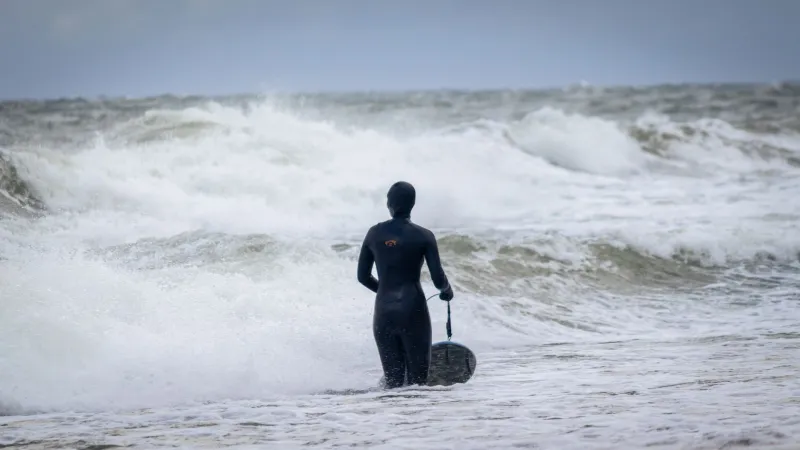
Here's a scenario that plays out every single year along coastlines from San Diego to the Outer Banks. An athlete spends June through September grinding on the sand — barefoot sprints, dune climbs, surf conditioning, the whole deal. They feel unstoppable. Then November rolls in, the water gets cold, the crowds disappear, and they make the call most people make: they move the whole operation indoors.
Months later, they lace up their shoes for their first beach session of the new year and something feels... off. Their legs feel heavy. Their footwork is clunky. Their stability is gone. They chalk it up to being rusty, but the truth is messier than that.
The gym didn't just fail to maintain their beach fitness. In some very specific ways, it worked against it.
Your Nervous System Learned Sand — And the Gym Is Teaching It Something Else
This isn't about effort or intensity. Plenty of athletes train hard all winter. The problem is specificity — and it goes deeper than most people realize.
When you train on sand, your neuromuscular system is constantly negotiating an unstable, unpredictable surface. Every single step triggers micro-corrections from your ankles, knees, hips, and core. Your proprioceptive system — the network of sensors in your muscles and joints that tells your brain where your body is in space — gets an absolutely relentless workout. Over a full season, those adaptations compound into something genuinely powerful.
Now put that same athlete on a rubber gym floor or a treadmill belt. The surface is rigid. It doesn't shift. It doesn't sink. The proprioceptive demand drops dramatically. Your nervous system stops practicing the rapid-fire stabilization patterns it built on the beach and starts optimizing for a completely different movement environment — one where the ground always pushes back the same way, every time.
Do that for four or five months straight, and you're not just pausing your beach-specific adaptations. You're actively overwriting some of them.
The Biomechanics Problem Nobody Talks About
Let's get a little more specific, because the differences between sand movement and gym movement go well beyond surface feel.
On sand, your foot strike is wider and your landing is softer. Your glutes and hamstrings have to work harder to generate propulsion because the surface absorbs energy rather than returning it. Your stride is shorter and your ground contact time is longer. All of this creates a very particular muscular demand pattern.
On a treadmill or a gym floor, the opposite is true. The surface is energy-returning. Your stride mechanics shift. Your calves and quads take on a bigger share of the load. The stabilizer muscles that sand training recruits so aggressively — the peroneals, the intrinsic foot muscles, the hip abductors — get comparatively little work.
Spend a full winter reinforcing gym-floor movement patterns and you're essentially retuning your body's motor programs away from what the beach demands. That's why spring sessions feel so rough. It's not fitness you've lost — it's specificity.
Smart Winter Training Doesn't Replace Sand — It Complements It
Here's the thing: this isn't an argument against indoor training in winter. Cross-training has real value. Strength work, mobility, cardiovascular conditioning — all of it matters. The issue is doing it without any strategy to protect your beach-specific adaptations.
The athletes who come back strongest in spring aren't the ones who went hardest in the gym all winter. They're the ones who used the gym intelligently while keeping some version of sand work in the rotation.
Even on the coldest days, a 20-minute barefoot session on whatever beach is accessible does more to preserve your neuromuscular adaptations than an hour of treadmill intervals. Sand doesn't care about the temperature. Your nervous system will still respond.
If genuine beach access is truly off the table — think athletes in the Northeast dealing with January blizzards — there are still ways to keep your proprioceptive system sharp indoors. Balance boards, BOSU work, and single-leg stability drills aren't perfect substitutes, but they maintain some of the instability demand that rigid surfaces eliminate. Use them as bridges, not replacements.
A Framework for Keeping Your Beach Fitness Alive Through Winter
Think of your winter training in three layers.
Layer one is your baseline strength work. This is where the gym earns its keep. Compound movements — deadlifts, Bulgarian split squats, hip thrusts — build the raw horsepower you'll express on sand. Do this two to three times a week and don't apologize for it. Strength is transferable.
Layer two is your instability maintenance. This is the piece most beach athletes skip entirely. At least once a week, get onto an unstable surface — sand when possible, a balance board when not. Keep your proprioceptive system engaged. Even a short session of single-leg work, lateral shuffles on a BOSU, or barefoot stability drills will signal your nervous system to hold onto those beach-specific patterns.
Layer three is your actual sand exposure. Even monthly beach sessions during the off-season make a measurable difference. If you're within driving distance of a coastline, this should be non-negotiable. Gear up, brave the cold, and get at least some reps on the real surface. Your body will remember what it learned.
Stop Thinking of Winter as the Off-Season
The mental shift matters as much as the programming. Too many beach athletes treat winter as a pause — a time to just maintain general fitness until the real training resumes. That mindset is exactly what leads to the spring regression problem.
Winter is an opportunity to build strength and power that you can then express on sand come warmer months. But only if you protect the beach-specific foundation you already have. Abandon it entirely and you'll spend the first month of every new season just clawing back to where you were — which means you never actually progress year over year.
The athletes who own the shore aren't the ones who train hardest in summer. They're the ones who train smartest all year. That means understanding what the gym can give you, what it can take away, and how to use both seasons intentionally.
Don't let a concrete floor undo what the sand built. Train hard. Train specific. And keep at least one foot in the sand, even when it's 40 degrees out.