Why Hitting the Gym Might Actually Be Wrecking Your Beach Game
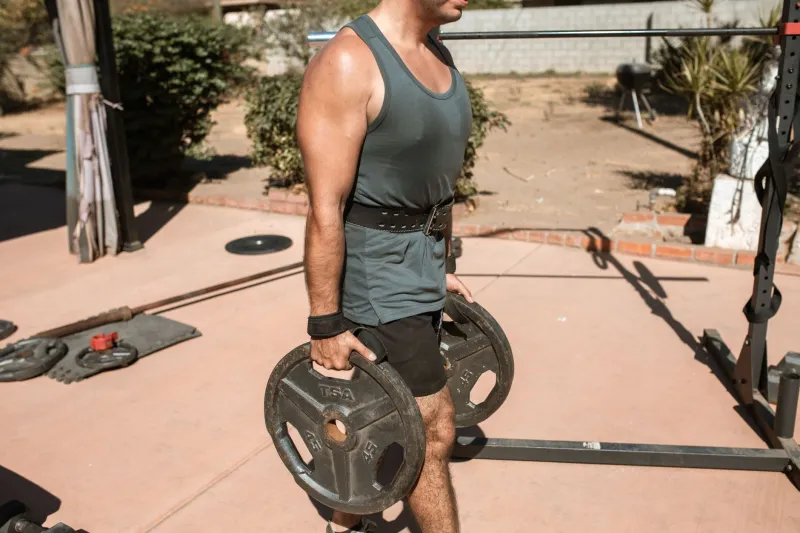
Here's a scenario a lot of beach athletes know well: you've been grinding in the gym all winter, packing on strength, moving serious iron. Then you hit the sand in spring and something feels... off. Your legs are heavy. Your balance is choppy. Movements that used to feel fluid now feel mechanical. You're stronger on paper, but somehow less athletic where it counts.
That's not bad luck. That's a real biomechanical phenomenon, and it happens more than most people want to admit.
The Problem With Getting Strong in a Box
Gym strength is real strength — nobody's arguing that. Squats build quads. Deadlifts build posterior chain. Bench press builds upper body pushing power. All of that matters. But here's the catch: the gym is a controlled, predictable environment. Barbells move in fixed planes. Machines eliminate stabilizer recruitment. The floor doesn't shift under your feet.
Sand does all of those things — constantly.
When you train on the beach, your nervous system is perpetually negotiating with an unstable surface. Every step, every push, every lateral cut demands micro-adjustments from dozens of small stabilizing muscles that a squat rack will never touch. Your ankles, your intrinsic foot muscles, your hip abductors, your deep core — they're all firing in real time, responding to a surface that's actively pushing back in unpredictable ways.
The gym, by contrast, trains your body to operate efficiently within a narrow, repeatable movement pattern. That's great for building peak force output. But it can also train your nervous system to stop recruiting those stabilizers, because on a flat, rigid floor, you simply don't need them.
Neural Adaptation: The Double-Edged Sword
This is where things get genuinely interesting — and a little humbling.
Neural adaptation is the process by which your brain gets better at recruiting motor units for specific movements. When you deadlift three times a week for six months, your nervous system becomes highly efficient at that exact pattern. You get stronger, faster, more coordinated — within that movement.
But neural adaptation is also specific. The efficiency gains you earn on a barbell don't automatically transfer to a dynamic, variable surface. Research in motor learning consistently shows that the more specialized your training environment, the narrower the transfer window to different conditions. In plain terms: your gym-built neural pathways aren't automatically fluent in the language of sand.
Some beach athletes notice this as a loss of reactive agility — that split-second ability to adjust mid-movement when the ground shifts. Others feel it as a reduction in proprioceptive sensitivity, that internal sense of where your body is in space. Both of these are trainable qualities, and both can get quietly dialed back by months of gym-only work.
The Muscle Tension Trap
There's another piece of this puzzle that doesn't get talked about enough: chronic muscle tension patterns.
Heavy lifting — especially bilateral movements like back squats and conventional deadlifts — tends to build tightness in the hip flexors, the thoracic spine, and the posterior chain over time. For gym athletes, that tightness is often managed through stretching and mobility work. But for beach athletes, it creates a specific problem: sand running and open-water swimming both demand rotational freedom and fluid hip extension. If your hips are locked up from six weeks of heavy squatting, your stride mechanics on soft sand are going to suffer, full stop.
This doesn't mean stop squatting. It means understanding that gym work creates physical debts that beach performance will collect on — whether you're ready or not.
So What Does Smart Cross-Training Actually Look Like?
The goal isn't to abandon the weight room. It's to use it strategically, in a way that enhances beach performance rather than quietly competing with it.
Prioritize unilateral movements. Single-leg squats, Bulgarian split squats, single-arm rows — these force stabilizer engagement in ways that bilateral lifts don't. They also build the kind of asymmetrical strength that translates directly to sprinting on uneven terrain.
Train in unstable positions when possible. Incorporate movements on a Bosu ball, a balance board, or even just standing on one leg during upper-body exercises. It won't replicate sand, but it keeps your stabilizing systems active and engaged between beach sessions.
Watch your volume ratios. If you're spending four days a week in the gym and one day on the sand, your body is going to adapt to the gym. Flip that equation during your peak beach training season. Use the weight room as a supplement, not the main event.
Mobilize aggressively after every gym session. Hip flexor stretches, thoracic rotations, ankle circles — spend fifteen minutes on mobility work after lifting, not just before. Your beach performance will thank you.
Program deload weeks before big beach training blocks. Give your nervous system a chance to reset before transitioning back to sand-based work. A week of lower-intensity gym sessions will allow those stabilizing neural pathways to reassert themselves when you hit the beach.
The Bigger Picture
The beach doesn't care how much you bench. It doesn't reward the athlete with the most gym PRs — it rewards the athlete who moves best in chaos, who adapts fastest to shifting conditions, and whose body stays functional across a wide range of unpredictable demands.
Gym training can absolutely support that athlete. But only if you're honest about what it builds and what it costs. The cross-training paradox is real: more gym work doesn't automatically mean better beach performance. In some cases, it actively gets in the way.
The athletes who figure this out are the ones who stop treating the gym like the goal and start treating it like a tool. One tool among many — and not always the sharpest one in the bag when the sand is calling.
Train smart. Own the shore.