Why Training When Everyone Else Shows Up Is Quietly Killing Your Progress
Picture this: you show up to your favorite stretch of beach on a Saturday afternoon in July, foam roller under one arm, water bottle in the other, ready to work. And then you see it — a wall of umbrellas, screaming kids, volleyball nets strung up directly in your sprint lane, and a TikTok influencer doing something inexplicable with a resistance band right where you planned to do your lateral drills.
Yeah. That's peak hour. And if you're serious about your beach training, it's quietly sabotaging everything you're trying to build.
The Real Cost of Training in a Crowd
Most people chalk a crowded beach up to a mild annoyance — you dodge a few people, shorten your sprints, maybe skip the mobility work because there's no room. But the actual performance cost runs a lot deeper than a few interrupted reps.
First, there's the interruption effect. Research on cognitive performance consistently shows that even minor distractions fragment your focus in ways that take minutes — sometimes longer — to fully recover from. On the sand, that means your sprint intervals get cut short because a family walks into your path. Your tempo breaks. Your heart rate drops. You've lost the adaptation window you were chasing.
Then there's the surface problem. Popular beach sections during peak hours are churned up, uneven, and littered with everything from sandcastles to abandoned flip-flops. The soft, consistent sand that makes beach training so effective for building ankle stability and posterior chain strength? Gone. You're navigating an obstacle course instead of training on a performance surface.
And don't underestimate the mental load. Having to constantly scan for pedestrians, pause your sets, or reroute your movement patterns burns cognitive energy. That's energy your brain could be using to maintain form, push through discomfort, or stay locked into a flow state — the kind of deep training focus that separates athletes who plateau from athletes who keep getting better.
Social Media Made It Worse
Here's something nobody really talks about: Instagram and TikTok have genuinely disrupted the beach training calendar. Certain spots — think Venice Beach, Miami's South Beach, Malibu, the Jersey Shore boardwalk — have become content destinations. People show up not to train but to be seen training. The result is that beaches that used to be quiet on weekday mornings are now buzzing by 8 a.m. because everyone wants that golden-hour shot.
If you're building your schedule around what's convenient without thinking about crowd patterns, you're essentially competing for space with people who aren't even there to work out.
When the Shore Actually Belongs to You
Here's the good news: most beaches in the US follow pretty predictable crowd patterns, and once you understand them, you can engineer your training schedule around genuine solitude.
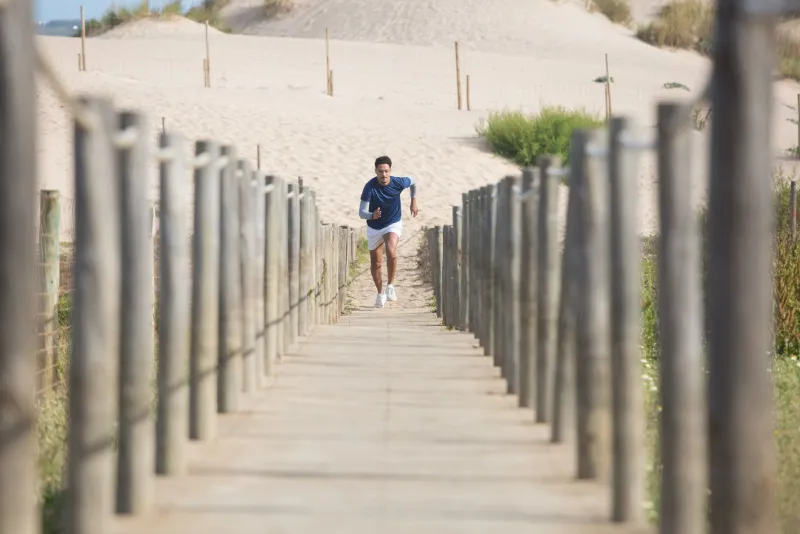
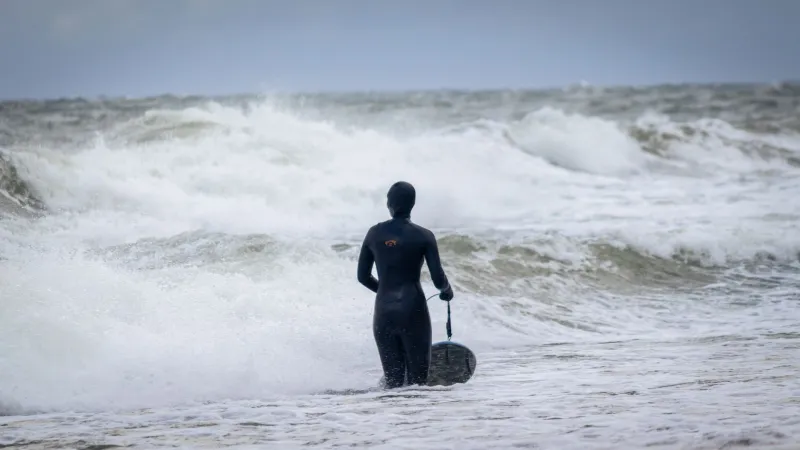
Early weekday mornings are your best weapon. Before 7 a.m. on a Tuesday or Wednesday, even popular beaches are largely empty. You get the firmest, most consistent sand (before foot traffic chews it up), cooler temperatures, and often some of the best light you'll ever train in. Bonus: the ocean is usually calmer in the morning, which matters if any of your work involves water entry.
Late evenings on weekdays are a close second. After 6 p.m. in the fall and spring — when daylight is shorter — beaches clear out fast. You get a solid two-hour window of near-empty shoreline. The sand is warmer from a full day of sun exposure, which is actually great for barefoot work.
Shoulder season is underrated. September and October on the East Coast, April and May on the West Coast — these are months when the weather is still genuinely good but the tourist crowds have evaporated. If you can shift even a portion of your heavy training block into the shoulder season, you'll have access to stretches of beach that feel like a private performance facility.
Scouting Spots That Stay Quiet
Beyond timing, it's worth investing some effort in finding sections of coastline that simply don't attract heavy foot traffic year-round.
State park beaches often require a parking fee, which alone filters out a huge portion of casual visitors. National seashores — Cape Hatteras, Point Reyes, Padre Island — have long, undeveloped stretches where you can train without seeing another person for miles. Beaches accessible only by a longer walk from the parking lot also tend to stay quieter, since most casual beachgoers self-select out at the first sign of inconvenience.
Do a little reconnaissance. Drive or bike the coastline near you on a Tuesday morning and a Saturday afternoon. The difference will be stark, and you'll quickly identify which sections stay calm regardless of the season.
What Happens When You Train Alone on Empty Sand
This is the part that might surprise you. Training during off-peak hours doesn't just remove the negatives — it actively adds something.
Without the social noise and constant visual interruptions, your sessions develop a different quality. Athletes consistently report hitting flow states more easily when there are no external distractions pulling them out of the moment. Your rest periods become genuine recovery windows instead of scanning-the-crowd-for-obstacles periods. Your sprint lanes are clean. Your movement is uninterrupted.
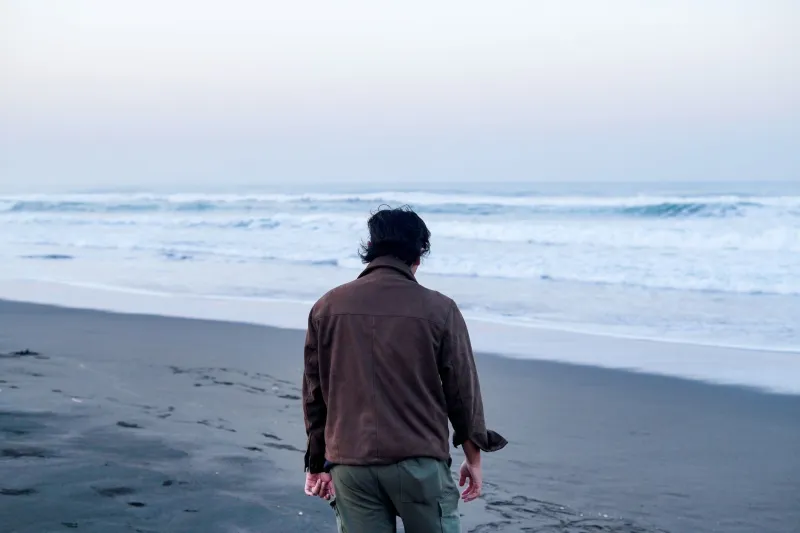
There's also a mental toughness component that builds quietly over time. Showing up to an empty beach at 6 a.m. when it's 58 degrees and a little windy, with nobody watching and no social content to create — that's pure intrinsic motivation. You're there because you want to be better. That mindset compounds.
And practically speaking, an uncluttered beach forces you to be more creative with your programming. No volleyball net to use as a marker? You learn to pace your sprints by feel. No other athletes around to benchmark against? You develop a sharper internal sense of effort. These are skills that translate directly to performance.
Building Your Off-Peak Schedule
If you want to start structuring your training around smarter timing, keep it simple:
- Identify your two or three priority sessions for the week — the ones where quality matters most. Schedule those for early weekday mornings or shoulder-season windows.
- Use peak hours for lower-stakes work — a casual swim, a recovery walk, mobility work that doesn't need clean lanes or uninterrupted space.
- Scout two or three backup spots that are consistently less crowded, so you're never stuck choosing between a chaotic beach and skipping the session entirely.
- Check local tide charts while you're at it. Low tide expands the firm-sand zone dramatically and often reveals stretches of beach that are technically accessible but rarely visited.
The beach is one of the most powerful training environments on earth. Don't let a crowd of sunbathers and content creators take that away from you. Own your schedule, own your space, and train when the shore is actually yours.