Training Alone on the Shore: Why Solitude Is the Ultimate Mental Fitness Tool
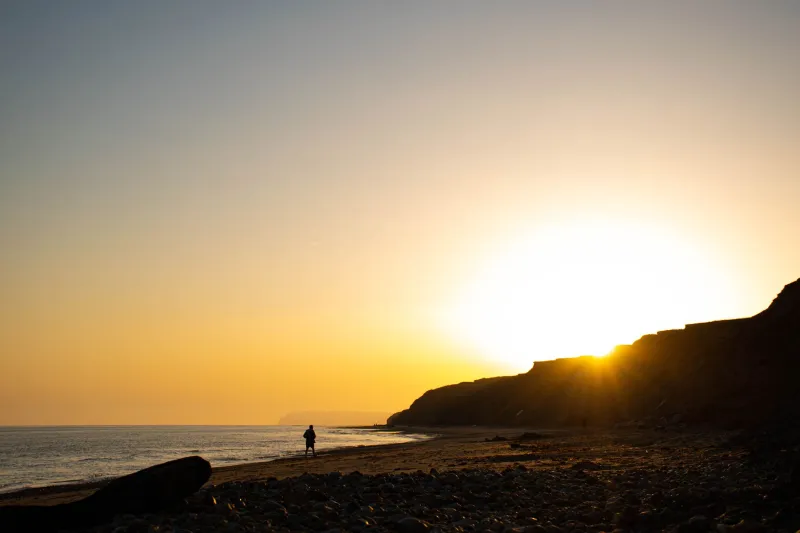
There's a specific kind of quiet that hits when you're standing at the water's edge at 6 a.m., the sun barely cresting the horizon, and there's nobody around. No instructor counting reps. No gym buddy cracking jokes between sets. No playlist someone else curated. Just you, the sand under your feet, and whatever you brought to the workout that day.
For a lot of people, that scenario sounds lonely. Maybe even a little intimidating. But for athletes who've made solo beach training a habit, it's not loneliness they feel — it's something closer to freedom. And it turns out, that freedom is doing something remarkable to their mental game.
The Paradox Nobody Talks About
Here's the thing about training in a group: it feels motivating because it is motivating — in the moment. The energy of a packed fitness class, the social accountability of a training partner, the competitive push of someone running alongside you — all of it works. Research consistently shows that social exercise increases effort and enjoyment.
But motivation that comes from the outside has a ceiling. When the class ends, the instructor goes home, or your buddy cancels, you're left with only what you've built internally. And if you've always relied on external fuel, that internal engine might be running on fumes.
Solo training — especially in a raw, unstructured environment like the beach — forces you to build that internal engine from scratch. You become your own coach, your own hype person, and your own accountability system. That's not a consolation prize. That's elite-level mental conditioning.
What the Research Actually Says About Solitude and Mental Toughness
Psychologists have long studied the relationship between solitude and psychological resilience. What they've found challenges the popular notion that connection is always better. A 2019 study published in the Journal of Personality found that voluntary solitude — time spent alone by choice — was associated with greater emotional regulation and reduced anxiety in adults who practiced it regularly.
The key word there is voluntary. Choosing to be alone, especially during a physically demanding task, trains the brain to sit with discomfort without reaching for distraction. The beach is particularly effective here because it strips away the usual crutches. No mirrors. No screens. No ambient gym chatter. Just the rhythmic noise of waves and the honest feedback of your own body.
Outdoor environments amplify this effect. Studies on "green exercise" — physical activity in natural settings — consistently show improvements in mood, self-esteem, and cognitive clarity compared to the same workouts done indoors. The beach, with its combination of open space, natural light, and the psychological weight of the ocean, is arguably the most potent version of this.
Decision Fatigue Doesn't Stand a Chance
One underrated benefit of solo beach training is what it does to your decision-making capacity. In a group class, decisions are made for you. The instructor picks the movements, the pace, the rest intervals. That's convenient, but it's also a missed opportunity.
When you're on the beach alone, you have to decide everything. How far to sprint. When to rest. Whether to push through that burn in your legs or dial it back. Whether today calls for high intensity or something more deliberate. These micro-decisions, made repeatedly under physical stress, train the prefrontal cortex in ways that translate directly to real-life clarity.
Athletes who train solo often report sharper focus and better problem-solving at work. It's not coincidental. The mental reps you put in during a self-directed beach session are building the same cognitive muscle you use when navigating a tough conversation, a high-stakes deadline, or a moment that demands you think clearly under pressure.
Emotional Regulation at the Water's Edge
There's also something specific about the ocean itself that deserves attention. Research on "blue space" — environments near water — shows consistent links to reduced cortisol, lower stress perception, and improved emotional balance. The sound of waves has been shown to promote alpha wave activity in the brain, the same relaxed-but-alert state associated with meditation.
When you combine that neurological environment with the internal demands of solo training, you get a powerful cocktail for emotional regulation. You're learning to manage discomfort, frustration, and fatigue without external support — all while your nervous system is being gently soothed by one of the most restorative environments on the planet.
Over time, this creates what sports psychologists call affect tolerance — the ability to sit with difficult emotions without being overwhelmed by them. That's not something a 45-minute HIIT class with a DJ set can easily deliver.
The Confidence That Only Comes From Showing Up Alone
Ask anyone who's been training solo on the beach for a few months and they'll tell you the same thing: there's a specific kind of confidence that develops. It's quieter than the kind you get from hitting a PR in front of a crowd. It's more durable.
When you show up to an empty beach, design your own workout, push through it without anyone watching, and walk back to your car knowing you did the whole thing on your own terms — that does something to your self-concept that's hard to replicate elsewhere. You stop waiting for permission to work hard. You stop needing applause to validate the effort.
That internal validation loop is one of the most valuable things you can build as an athlete and as a person. It's the foundation of genuine confidence, not the performance of it.
How to Make Solo Beach Training Work for You
If you're used to group classes or gym environments, the transition to solo beach training can feel awkward at first. That's normal — and it's actually part of the process. Here are a few ways to ease in:
Start with structure. Give yourself a simple framework before you hit the sand. Even something as basic as "four rounds, three exercises, 40 seconds on/20 off" keeps you anchored when motivation wobbles.
Ditch the earbuds sometimes. Music is great, but try at least one session with nothing but the sound of the ocean. The discomfort of that silence is where the mental training actually happens.
Embrace unplanned decisions. Let yourself improvise mid-workout. Sprint to that rock, then do push-ups, then walk into the shallows. The chaos of self-directed movement is a feature, not a bug.
Reflect after. Even two minutes sitting in the sand after your session — no phone, no rush — helps consolidate the mental benefits. Notice how you feel. Let that feeling become the reward.
The Shore Doesn't Need Your Audience
Group fitness has its place. Community matters. But somewhere along the way, a lot of us forgot how to train without an audience — and in forgetting that, we lost access to a deeper layer of mental strength.
The beach doesn't care if you have a cheering section. It doesn't adjust the tide for your comfort level. It just shows up, every single day, and asks what you've got. Training alone in that environment, answering that question honestly, is one of the most quietly radical things you can do for your mind.
Train hard. Live free. Own the shore — even when nobody's watching.