When the Shore Becomes a Trap: Recognizing the Overtraining Cycle Before It Breaks You
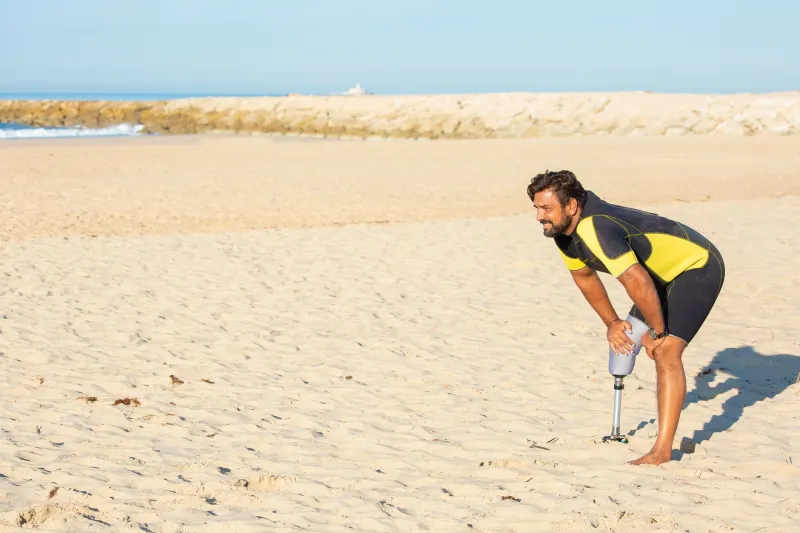
There's a particular kind of athlete who shows up at the water's edge every single morning. Sun barely up, shoes already off, ready to put in work. Dedication like that is admirable — genuinely. But there's a thin line between showing up consistently and showing up compulsively, and on the sand, that line gets blurry fast.
The beach doesn't close. There's no gym membership that expires, no trainer locking the door at 9 PM. When conditions are perfect — warm air, low humidity, a solid swell rolling in — the psychological pull to train is almost impossible to resist. And that's exactly where the problem starts.
Why Beach Athletes Are Uniquely Vulnerable to Overtraining
Overtraining isn't just about doing too much volume. It's about doing more than your body can absorb and recover from before the next session hits. For gym athletes, built-in friction — commute time, equipment availability, crowded floors — creates natural buffers. Beach athletes don't have those buffers.
Step outside and you're already there. The training environment is literally your backyard, your neighborhood, your daily view. That accessibility is one of the greatest advantages of coastal fitness, but it also removes the natural rest that most athletes build into their week without even realizing it.
Add in the seasonal psychology of beach culture in the US — the pressure to be ready for summer, to keep up with the crew, to not waste a perfect California morning or a rare clear day on the Gulf Coast — and you've got a recipe for chronic overreaching that masquerades as hustle.
What's Actually Happening Inside Your Body
When you train, you're creating controlled damage. Muscle fibers tear microscopically, energy systems get depleted, and your central nervous system takes on stress load. Recovery isn't the absence of training — it's the actual process by which you get stronger, faster, and more resilient.
Skip that window and you don't just stagnate. You regress.
Scientifically, overtraining syndrome (OTS) involves a cascade of hormonal disruptions. Cortisol — your primary stress hormone — stays chronically elevated while testosterone and growth hormone drop. Your immune system takes a hit. Inflammation that should be acute and purposeful becomes systemic and damaging. Sleep quality deteriorates even when you're exhausted. Performance markers that were climbing start sliding backward.
For beach athletes specifically, there's an added layer. Training in heat and salt air already demands more from your cardiovascular and thermoregulatory systems than a climate-controlled gym does. Your body is working harder just to maintain baseline function during a session on the sand. That means the recovery debt accumulates faster than most athletes account for.
The Warning Signs You're Probably Ignoring
Overtraining rarely announces itself dramatically. It creeps in wearing the disguise of a bad day, a rough night's sleep, or just feeling a little flat. Here's what to actually watch for:
Persistent muscle soreness that doesn't resolve. Normal DOMS fades within 48 to 72 hours. If you're still sore four or five days out and a new session makes it worse, that's a signal.
Declining performance despite consistent effort. Your sprint times are getting slower. Your wave sessions feel harder. You're lifting less than you were two weeks ago. When output drops despite input staying the same, the math isn't adding up in your favor.
Mood swings and irritability. This one gets dismissed constantly. But hormonal disruption from overtraining directly affects neurotransmitter function. If you're snapping at people or feeling weirdly anxious before workouts you used to love, pay attention.
Elevated resting heart rate. Check it first thing in the morning before you get up. If your baseline is running five to ten beats higher than normal for several days in a row, your autonomic nervous system is telling you something.
Loss of motivation. Not the ordinary kind where you'd rather sleep in. The kind where you genuinely dread doing something you're usually passionate about. That's a physiological response, not a character flaw.
Building a Recovery Framework That Actually Fits Beach Life
The goal isn't to train less — it's to train smarter and protect the adaptations you're working so hard to build. Here's a practical framework for beach athletes who need structure without rigidity.
Use a traffic light system for daily readiness. Green means you slept well, resting heart rate is normal, mood is solid, and you're genuinely motivated. Train hard. Yellow means one or two warning signs are present. Scale back intensity, shorten the session, or switch to active recovery — a walk along the shoreline, some light mobility work in the sand. Red means multiple flags are flying. Take the day completely off. The beach will be there tomorrow.
Schedule mandatory rest before you need it. Don't wait until you're broken to build in recovery. Block out two full rest days per week during high-intensity training blocks. If that feels excessive, start with one non-negotiable day and see how your performance responds in the following sessions. Most athletes are shocked by the improvement.
Reframe what counts as beach time. Recovery doesn't mean abandoning the shore. A slow walk at the water's edge, floating in calm surf, or just sitting on the sand and breathing ocean air — these are legitimate recovery tools. You're still connected to the environment without driving another nail into an overtaxed system.
Track more than your workouts. Log your sleep hours, your mood, your resting heart rate, your perceived exertion during sessions. Patterns emerge over two to three weeks that you'd never catch day to day. Data takes the ego out of the decision to rest.
The Mental Shift That Changes Everything
Here's the truth that every driven beach athlete eventually has to sit with: rest is not lost time. A recovery day isn't a gap in your training log — it's a training stimulus in itself. The adaptation you're chasing happens during the downtime, not the grind.
The athletes who consistently show up strong season after season aren't the ones who never missed a morning session. They're the ones who figured out when to walk away from the water and come back sharper for it.
The ocean will keep moving whether you're in it or not. Your job is to make sure you're still ready to meet it.