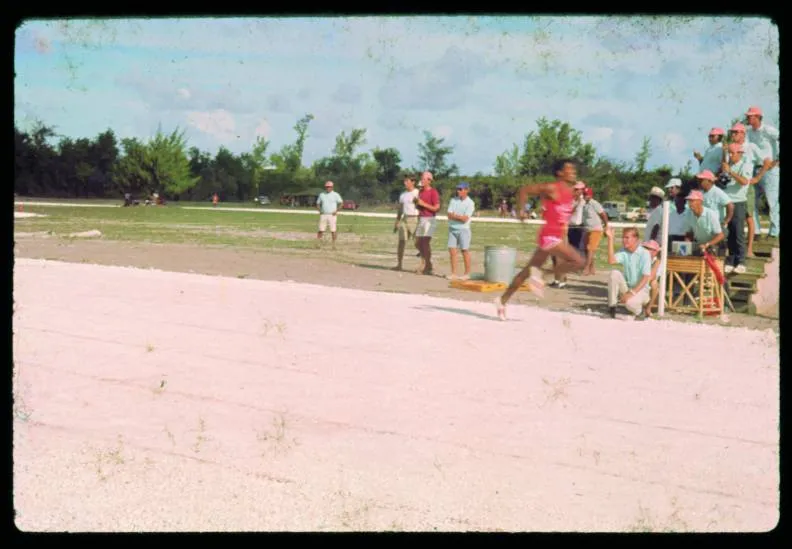
Shoes Off, Performance Up? What Going Barefoot on the Sand Really Does to Your Body
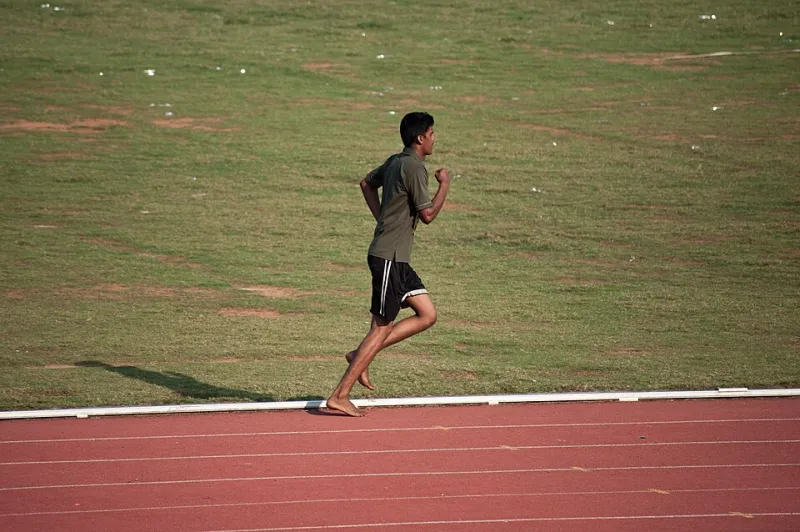
Photo: Liji Jinaraj, CC BY-SA 2.0, via Wikimedia Commons
There's something almost instinctive about kicking off your shoes the second your feet hit the beach. But for a growing number of serious beach athletes, that move isn't just about comfort — it's a deliberate training choice with real performance implications.
Barefoot running and training on sand has moved well beyond a fringe idea. Coaches up and down the coasts are experimenting with it, competitive beach volleyball players swear by it, and weekend warriors are starting to notice that their feet feel fundamentally different after a few months of shoeless sand sessions. So what's actually going on beneath the surface?
What Happens to Your Body When You Ditch the Shoes
Let's start with the mechanics. When you run in a standard shoe — especially a cushioned one — your foot strikes the ground heel-first. Your shoe absorbs a chunk of that impact, which sounds like a good thing, but it also means your lower leg muscles, foot stabilizers, and proprioceptive sensors get a lot less work to do.
Go barefoot on sand, and the equation flips entirely.
Soft sand forces a forefoot or midfoot strike almost automatically. Your arch engages. Your Achilles tendon and calf complex have to work through a fuller range of motion with every stride. The small intrinsic muscles of your foot — the ones that basically atrophy inside a structured shoe — suddenly have a job again. And because sand shifts with every step, your ankles and stabilizing muscles around the knee are constantly making micro-adjustments to keep you upright and moving efficiently.
The result? A training stimulus that's genuinely hard to replicate anywhere else.
"Sand is the ultimate unstable surface," says one coastal conditioning coach who works with competitive beach volleyball teams in Southern California. "When my athletes train barefoot on soft sand, I'm getting foot and ankle strength work, proprioception training, and cardiovascular conditioning all at once. You just can't stack those adaptations that fast in a gym setting."
The Stabilizer Muscle Effect
Here's the part that surprises most people who make the switch: the soreness doesn't show up where you expect it.
First-timers going barefoot on sand typically report deep aching in the arches, the tops of their feet, and along the lower shin — not the quads or hamstrings that usually complain after a hard run. That's your body telling you it's recruiting muscles that have been essentially dormant for years.
Over time, those adaptations translate to real performance gains. Athletes who've committed to barefoot sand training consistently report improved balance, better ankle stability, and a lighter, more efficient running gait — even when they put shoes back on for road or track work. The foot becomes a tool instead of just a platform.
One distance runner who trains on the beaches near San Diego described it this way: "My foot strike completely changed. I used to heel-strike pretty aggressively. After about two months of barefoot sand work, I was naturally landing under my center of mass. My injury rate dropped and my times got faster. I didn't expect those two things to happen at the same time."
The Risk Side of the Equation
Before you sprint out of your sneakers and onto the shore, let's talk about the other side of this.
Barefoot training done wrong — or done too fast — is a reliable path to stress fractures, plantar fasciitis, and Achilles tendinopathy. The same muscles and tendons that get stronger with gradual exposure can get absolutely wrecked with sudden overload. If you've spent years in cushioned shoes, your feet are essentially deconditioned. Treating them like they're ready for a hard barefoot workout on day one is like walking into a gym and maxing out on deadlifts after six months off.
There are also structural considerations that barefoot training simply can't fix. People with high arches, flat feet that overpronate significantly, or pre-existing plantar issues may need orthotic support regardless of how much sand time they log. Going barefoot isn't a cure for underlying biomechanical problems — in some cases, it can aggravate them.
And then there's the surface itself. Wet, compacted sand near the water is firmer and more forgiving on foot strike. Dry, soft sand higher up the beach is dramatically more demanding on the lower leg and foot. Both have a place in training, but they're not interchangeable — especially for beginners.
How to Know If Barefoot Training Is Right for You
Honest answer: most healthy athletes can benefit from some barefoot sand work. The key word is some.
Here's a simple framework for making the call:
Start with a foot health check. If you have chronic plantar fasciitis, a history of stress fractures, or significant flat-footedness, talk to a sports medicine professional or podiatrist before going shoeless. They can tell you whether barefoot work is appropriate and in what doses.
Introduce it as a supplement, not a replacement. The athletes seeing the best results aren't abandoning shoes entirely — they're adding 10 to 20 minutes of barefoot sand work at the end of existing sessions. Short beach walks, foot drills, and light jogging on wet sand are excellent entry points.
Follow the 10% rule (loosely). Don't increase your barefoot volume by more than about 10% per week. Your feet need time to adapt. If you're sore in your arches two days after a session, that's a signal to back off before your next one.
Pay attention to your gait cues. One of the genuine gifts of barefoot sand training is real-time feedback on your running form. If you're still heel-striking hard even without shoes, slow down and focus on shorter, quicker strides. Let the sand teach you.
Progress from wet to dry sand gradually. Start your barefoot work on the firmer, wet-packed sand near the waterline. As your feet strengthen over weeks, you can move into the softer dry sand for shorter intervals.
The Bottom Line
Barefoot training on sand isn't a gimmick, and it's not magic either. It's a legitimate tool that, used correctly, can build foot strength, improve your movement mechanics, and add a layer of conditioning that shoes and gym floors simply can't offer.
But like any training tool, it demands respect. The beach will humble you fast if you treat it like a shortcut. Take the gradual approach, listen to your body, and let the sand do what it does best — expose weaknesses and build the kind of functional strength that shows up when it counts.
Your shoes will still be there when you need them. The question is whether you're using them because they're helping, or just because you've never tried going without.